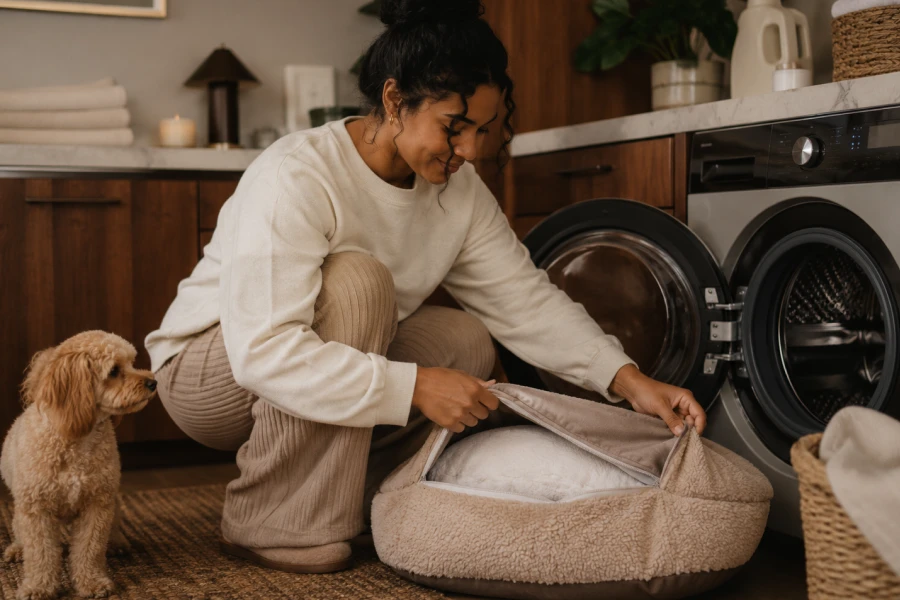
A pet bed can look harmless until fur, dust, and everyday smells settle deeply. Learning how to wash pet beds is less about chasing perfection than protecting comfort. A familiar cushion supports rest after walks, play, and long afternoons indoors. That makes rough scrubbing or rushed heat a poor trade for visible cleanliness. Every bed combines fabric, filling, stitching, and sometimes a separate removable cover. Those materials react differently once water, detergent, and spinning movement enter the picture. A careful approach lets you clean what needs attention without flattening everything inside. It also reduces the chance of lingering soap, warped foam, or loose seams. The aim is a refreshed resting place that still feels soft beneath paws. Good laundry decisions begin with patience rather than a one-size-fits-all routine.
Before touching a washer, inspect the bed as though it were a delicate jacket. Look underneath for zippers, loose threads, waterproof panels, and labels hidden near seams. Remove inserts only when their construction clearly allows it. Shake outside or vacuum first, because wet fur is far harder to remove later. Close fasteners so they do not snag plush fabric during cleaning. Separate tiny parts, such as straps or loose pads, before they disappear inside folds. A photo of faded care instructions can save time during future cleanups. These quiet checks create a dependable pet bed cleaning routine without adding much effort. They also reveal when hand cleaning is wiser than forcing a bulky item through machinery. Starting slowly protects the bed before laundry ever begins.
Choose the gentlest workable method after you understand the bed’s actual construction. Cool or lukewarm water often gives fabrics a calmer starting point. Match the cycle to the label instead of the amount of dirt you see. Too much agitation can pull stuffing into uneven pockets or strain decorative edges. Use a modest amount of cleaner, then allow water to do most work. Heavily scented products can leave a strong residue where pets sleep close. A second rinse may help thick covers feel cleaner and less soapy. Keep the drum spacious enough for the fabric to move freely. Select a process that supports the material rather than one that simply finishes fastest. That mindset keeps cleaning practical and far less risky.
Fresh stains deserve attention, yet aggressive treatment usually creates another problem. Blot moisture with a clean towel before it travels deeper through the fabric. Work from the edge toward the center so the marked area does not spread. Test any cleaner on a hidden spot before using it near visible surfaces. Avoid combining products in search of a stronger result. The safest pet bed stain removal tips respect color, texture, and a pet’s sensitive sleeping space. Let treated areas sit only as long as the product directions allow. Rinse thoroughly when the fabric can tolerate rinsing. Repeat a mild process when needed instead of scrubbing with force. A calmer response keeps a small mess from becoming permanent wear.
Drying deserves the same attention as washing because damp filling can hide inside thick corners. Press excess water out gently rather than twisting bolsters into distorted shapes. Reshape cushions while they remain slightly damp and flexible. Low heat works better than high heat for many plush materials. Pause midway to break apart clumps and turn the bed around. Air drying is often useful for foam, padded inserts, and delicate trims. Good gentle detergent choices are only helpful when the rinse and dry stages stay equally considerate. Check the center by touch before returning the bed to its usual place. A surface may feel dry while deeper layers still hold moisture. Giving the bed enough time prevents musty smells and restores comfortable loft.
A regular rhythm makes bed care easier than waiting for a major spill. Choose a frequency that suits shedding, outdoor activity, and your pet’s habits. Keep an extra blanket or familiar towel available during washing days. That small backup helps the routine feel less disruptive for sensitive pets. Store cleaning supplies nearby, but keep them safely out of reach. Notice which materials clean well and which need more cautious handling. Useful pet bed drying tips can become part of the same weekend reset. Over time, you will recognize when a cover needs washing versus a quick vacuum. You will also spot small seam issues before they become larger repairs. Consistency protects both the bed and the comfort attached to it.
The best results come from matching each decision to the bed in front of you. Some beds need a removable-cover wash, while others benefit from careful spot treatment. There is no prize for the hottest cycle or the strongest fragrance. Comfort, clean fabric, and fully dry filling matter much more. Keep notes if a particular setting works especially well for one bed. Replace worn inserts when support disappears despite good care. A clean resting place can feel familiar without looking brand new. Thoughtful maintenance keeps its function at the center of every choice. Your pet gets a soft place to settle, and you get a simpler routine. That is the quiet value of washing with care.



Leave a comment