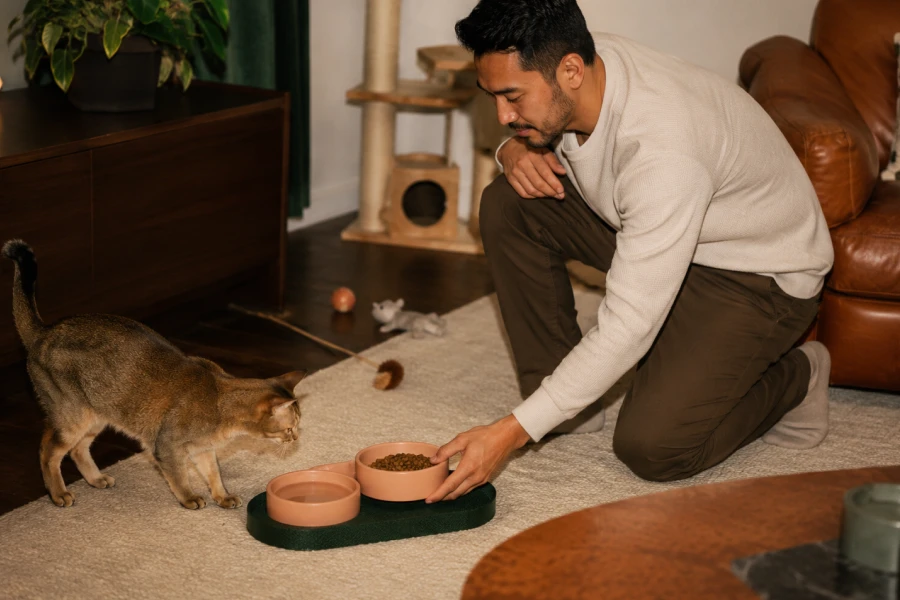
Food changes can feel surprisingly personal to a cat who knows their routine. Learning how to introduce dry food to cats is often about patience more than persuasion. A sudden switch may create suspicion at the bowl, even with a food that seems appealing. Gradual exposure gives your cat time to notice new scent, texture, and sound. It also helps you see how they respond before you make the next change. Your cat’s age, existing diet, appetite, and health history all matter. A veterinarian can provide tailored advice when nutrition questions involve medical needs. At home, the priority is a calm process that respects individual preferences. Small steps are easier to observe than dramatic changes. The transition can feel steady instead of stressful when it moves at your cat’s pace.
Begin by making the new food feel like an option, not a demand. Let your cat smell a few pieces near their usual bowl. You can offer them in a separate small dish at first. Keep the familiar meal routine intact while curiosity develops. Do not expect interest to appear immediately. Some cats need several quiet exposures before they investigate. A few dry food transition steps can create structure without forcing speed. Keep portions small enough that wasted food does not become discouraging. Notice whether your cat sniffs, licks, picks up, or avoids the kibble. Those small responses help you decide what to do next.
Once your cat shows some comfort, adjust only one part of the routine at a time. You might add a small amount to an established meal or present it beside familiar food. Move slowly enough that appetite changes are easy to see. Do not make a larger change simply because one meal went well. Consistency gives your cat a chance to build familiarity. Let scent and texture become normal before expecting a full serving. Keep fresh water available throughout the process. A gradual transition protects observation as well as comfort. Each small change should feel predictable to your cat. The pace matters more than the calendar.
The feeding environment can shape acceptance as much as the food itself. Choose a clean, quiet location away from sudden noise or busy foot traffic. Use a bowl your cat already recognizes when possible. Keep the surface stable so kibble does not roll around unexpectedly. Some cats respond well when dry food is offered through play. Thoughtful puzzle feeder feeding ideas can make exploration feel more engaging for curious cats. Introduce a new feeder separately from the food change when you can. Too many new elements at once can make the situation confusing. Watch your cat’s body language around the bowl. Comfort at the eating space supports comfort with the food.
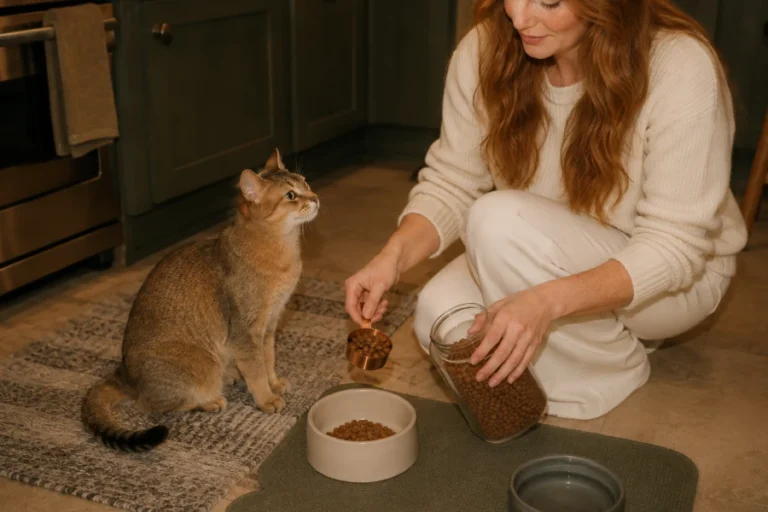
Observe more than whether food disappears from the dish. Notice appetite, water intake, energy, litter box habits, and usual behavior. Keep notes brief so the process stays realistic. A temporary hesitation can be normal, yet persistent refusal deserves attention. Check food freshness and storage before assuming your cat dislikes the kibble. A reliable kibble storage routine protects taste and keeps the food easier to evaluate. Avoid leaving dry food exposed to humidity or strong household smells. Contact a veterinarian about sudden or ongoing appetite changes, particularly with other symptoms. Information from the transition can be useful during that conversation. Observation turns the change into a clearer story.
Do not turn the bowl into a daily negotiation. Offer the planned food calmly, then let your cat decide whether to explore. Pressure can make a cautious cat more reluctant. Maintain familiar affection and play so the adjustment does not dominate the day. Return to the previous successful step if the pace seems too fast. There is no failure in slowing down. Every cat arrives at acceptance differently. The important part is making choices you can explain and observe. Patience keeps the process kinder for both of you. A gentle transition is often the most effective one.
A new dry food routine should build trust rather than test it. Keep changes gradual, food fresh, and the setting peaceful. Use your cat’s behavior as feedback, not as a challenge to overcome. Discuss individualized nutrition concerns with a veterinarian. Make one adjustment at a time, then give it room to settle. A quiet approach helps you learn what your cat actually needs. It also reduces wasted food and unnecessary worry. Over time, the new texture can become an ordinary part of meals. The relationship with the bowl stays comfortable. That is a successful transition. Keep the experience positive by ending meals without frustration or pressure. Your calm response can make tomorrow’s exposure easier. Progress may arrive quietly through repeated, comfortable encounters. Respecting that pace helps food feel safe. Gentle repetition gives unfamiliar textures time to become ordinary. That builds confidence at the bowl.


Leave a comment