
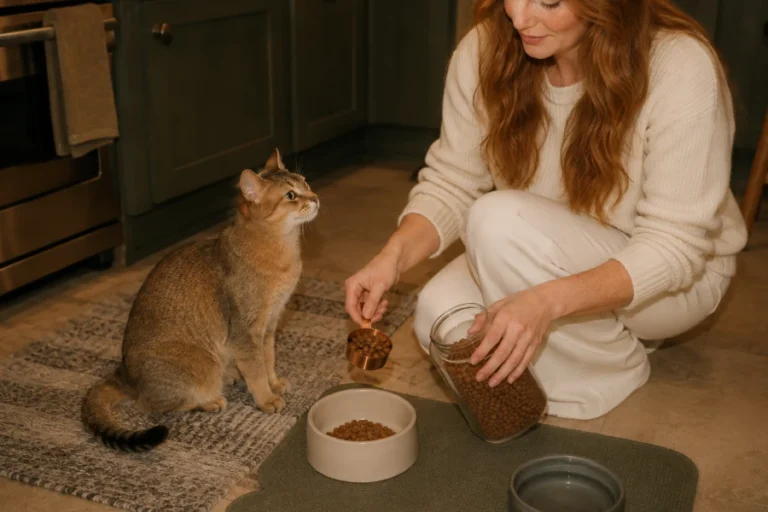
A feeding plan should work in the home where your cat actually lives. A dry food feeding schedule for cats can create welcome structure without becoming another stressful obligation. Some households need early breakfasts and late dinners. Others share care between family members, roommates, or a pet sitter. The right rhythm depends on your cat’s appetite, daily routine, and any veterinary guidance. It also depends on whether meals include wet food, treats, or other nutritional considerations. A clear schedule makes it easier to notice what changes from the usual pattern. That can be useful when appetite, weight, or behavior shifts. The goal is not a perfect timetable. It is a routine that makes care more dependable and easier to understand.
Start with your own household logistics before choosing exact meal times. Think about when someone can prepare food and notice whether it is eaten. Consider workdays, weekends, travel, and moments when the home is quiet. A realistic balanced cat meal rhythm will survive those changes better than an idealized plan. Keep it simple enough that another caregiver can follow it. Write down the basics if several people share feeding duties. This avoids duplicate bowls and missed meals. Use food packaging as a reference point, then ask a veterinarian about individual requirements. Build fresh water into the same daily check. Good scheduling starts with what is truly manageable.
Consistency does not require feeding at an identical minute every day. A reasonable time window can provide structure while leaving room for normal life. Cats often respond well to predictable routines, especially in quiet homes. However, unexpected appointments and delayed trains do happen. Choose a pattern that can flex without becoming confusing. A morning-and-evening framework may work for many homes, but it is not universal. Do not compensate for a delayed meal by automatically overfeeding later. Return to the usual amount and observe your cat’s response. Simple patterns are easier to maintain and easier to explain. The best routine is steady, not rigid.
A schedule can make ordinary changes easier to spot. When you know what was offered and when, appetite becomes more visible. You can notice whether a cat leaves food, asks early, or avoids a meal. This context is more useful than a bowl that is continually topped up. Keep notes for a short time when something seems different. A practical senior cat feeding adjustments discussion may be helpful as cats age or routines shift. Activity level, mobility, and medical history can influence feeding needs. Ask a veterinarian before making major changes based on assumptions. The schedule provides context; it does not provide a diagnosis. Clear timing supports clearer observation.
Life stage and lifestyle deserve a place in every feeding conversation. Kittens, adult cats, and older cats may have different needs. Indoor habits, outdoor access, activity, and social stress can also shape routines. Avoid copying a plan from another cat without considering those differences. Changes in household activity may call for thoughtful adjustments. A pet sitter should receive simple written instructions during travel. Keep storage, scoops, bowls, and water locations easy to understand. This reduces confusion when regular caregivers are away. Review the routine after major changes rather than assuming it still fits. Flexible care can remain reassuring when the essentials stay clear.
Use feeding information to support veterinary care, not to replace it. Bring a short timeline if appetite changes persist or appear suddenly. Mention changes in water intake, energy, vomiting, or usual behavior when relevant. A useful vet conversation starter for cat diets can help you organize those observations. Ask which signs require prompt attention and which can be monitored. Follow clinical recommendations about diet changes, treatment, or testing. Do not rely on a schedule alone when your cat seems unwell. The routine is a tool for noticing, not an explanation for everything. Good communication keeps care aligned with your cat’s needs. Veterinary guidance remains important whenever health is a concern.
A schedule should make daily care feel lighter, not more complicated. Keep portions, water, and timing visible enough for everyone involved. Review the plan when your cat’s life or household situation changes. Use a notebook, shared reminder, or simple routine marker if it helps. Avoid adding layers of tracking that no one can maintain. The strongest systems are usually the ones with the fewest moving parts. A familiar rhythm helps cats feel secure and helps owners see changes sooner. It can turn feeding from a hurried task into a steady check-in. Stay flexible, stay observant, and seek professional advice when needed. That is what makes a schedule useful in real life. A short handoff note can make care smoother when schedules change unexpectedly. Familiar instructions reduce avoidable mistakes for helpers. This keeps your cat’s routine steady even when the household is not. Small routines often create lasting clarity.



Leave a comment