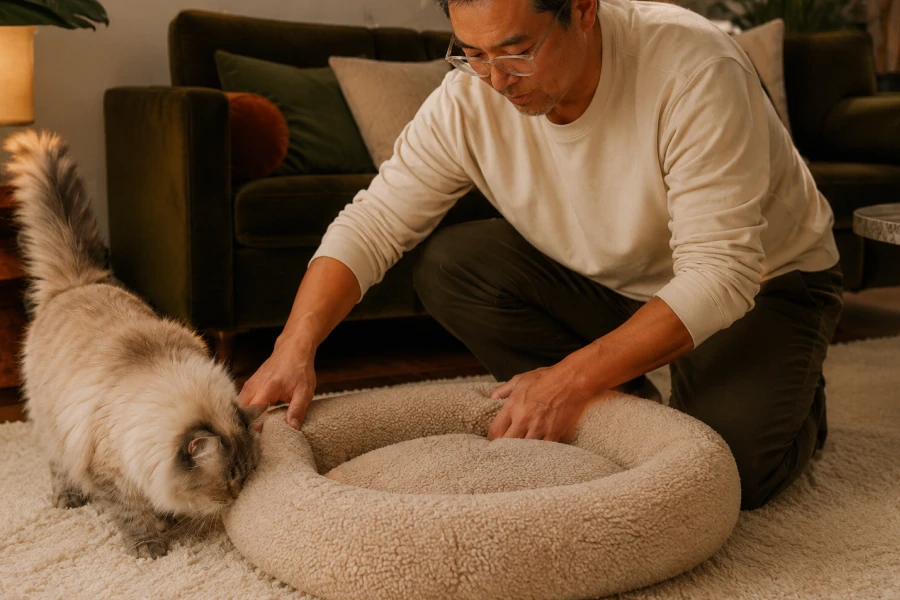
A washer can make regular bed care easier, but bulk changes the equation quickly. The phrase washing pet beds in a washing machine sounds simple until the cushion absorbs water. Suddenly, one bed can become heavy, unbalanced, and difficult for a drum to move. That does not mean every washable bed needs professional cleaning. It means the load needs as much consideration as the fabric itself. Covers, inserts, bolsters, and liners all behave differently in motion. A thoughtful washer routine protects equipment as well as your pet’s favorite place. It also helps prevent incomplete rinses and misshapen padding. Start with capacity, construction, and cycle choice before adding any product. A better result usually comes from working with the machine, not against it.
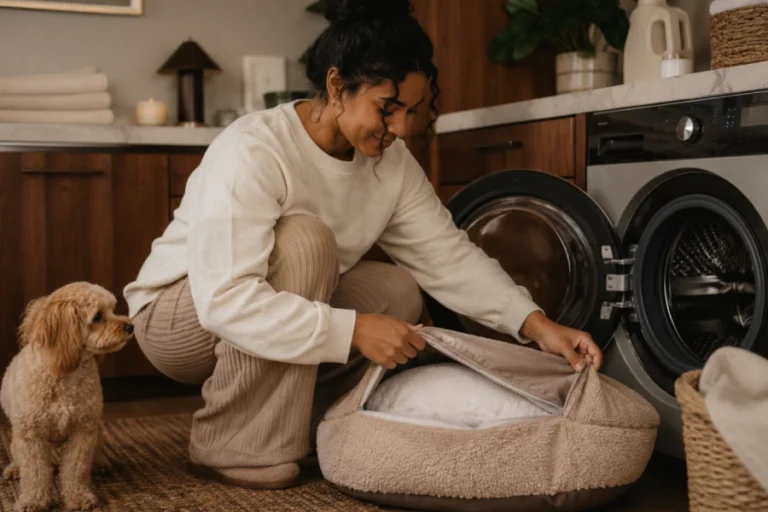
The washer drum offers an immediate answer about whether a bed belongs inside. Place the dry bed in the machine and check whether it can move comfortably. If it fills the space wall to wall, it is probably too large. Overcrowding limits water circulation and leaves grime trapped in thick corners. It can also create an awkwardly uneven spin. Remove hard inserts whenever the care label permits that step. A loose cover may wash safely even when the whole bed will not. This distinction makes washable pet bed care more flexible and realistic. Consider a laundromat machine for especially large, bulky items. Choosing the right size machine saves both time and unnecessary strain.
Use the label as the tie-breaker when cycle settings seem confusing. Delicate or low-agitation programs are often a reasonable starting point for soft covers. Cold or lukewarm water can help protect color and texture. Fast, intense cycles may look efficient but can shift filling into uncomfortable lumps. Add only enough detergent to clean the item without coating plush fibers. Skip boosters that are not clearly supported by the material. Put smaller removable pieces in a mesh bag when they could twist. This protects closures while supporting safe laundry steps for pet bedding. Watch the first wash closely when you are learning a new bed’s limits. One cautious cycle teaches more than repeated guesswork.
A balanced load is kinder to the machine and to the bed. Do not pair a large cushion with heavy towels just to fill empty space. That combination can compress fabric and make spinning harder. Instead, wash compatible light items only when the label allows it. Stop the cycle if the machine begins thumping or walking across the floor. Redistribute the load rather than hoping the problem corrects itself. Small adjustments protect seams and reduce stress on the drum. A front-loader may need different handling than a top-loader with an agitator. Notice how the bed shifts after soaking, because that change matters. Good laundry habits are built around control, not impatience.
Rinsing is where an apparently clean bed can still become uncomfortable. Thick fleece and quilted surfaces can trap detergent more easily than flat cotton. Consider an extra rinse when the fabric feels dense or heavily padded. Check the bed after washing for any slippery or perfumed residue. A clean scent is not proof that the rinse is complete. The right foam bed washing method treats foam as a material that needs less force and more airflow. If an insert cannot be machine washed, clean the cover separately. Dry the components fully before putting them back together. Residual moisture can create odor long after a wash looks finished. Thorough rinsing gives the entire bed a fresher foundation.
Once the cycle ends, the machine has done only part of the work. Lift the bed carefully, because wet padding can pull at seams. Smooth the surface and redistribute filling before heat or air drying begins. Use low heat only when the label permits it. Thick inserts may need to dry flat with plenty of circulating air. Check underneath, not only the top surface, for trapped dampness. Reassemble only when each layer is completely dry to the touch. Keep a spare towel or temporary cushion available for your pet. That avoids rushing a damp bed back into service. Finishing patiently keeps the wash from creating a new comfort problem.
A washing machine is useful when the bed, load, and settings agree. It is not automatically the best answer for every bulky cushion. Treat care labels, machine space, and material weight as a three-part decision. This approach keeps laundry day much calmer. It also makes future cleaning easier because you already know what works. Repeating a sensible routine is safer than constantly experimenting. When a washer is not appropriate, spot cleaning or cover-only care still count. The bed does not need a dramatic process to feel refreshed. It needs gentle handling at every stage. That is how practical laundry care stays practical. Check the washer’s filter and surrounding floor after bulky loads. Small follow-up checks complete a machine-friendly routine.



Leave a comment